Why Hidden Fees in Tree Service Columbia, SC Create So Much Pricing Confusion
Tree work is not like calling a plumber to fix a pipe. The scope of a tree removal job includes dozens of variables: species, trunk diameter, proximity to structures, soil conditions, equipment access, and debris volume. Each of these variables can reasonably be included or excluded from a base quote depending entirely on how a company structures its pricing model.
The South Carolina Attorney General’s Office and the South Carolina Department of Consumer Affairs have both issued consumer warnings advising homeowners to get every tree service agreement in writing before work begins, especially following storm events when out of town crews flood the Midlands market and verbal agreements become dangerously common. The fundamental issue is not bad actors. It is a pricing structure built on informal communication, which almost always produces confusion about what was and was not included in an estimate.
A competitor serving the Columbia market, prominently advertises transparent, itemized pricing with no hidden fees as a core selling point, because this is exactly what homeowners search for after a bad experience elsewhere. The fact that companies make it a headline feature tells you how frequently the problem occurs in this industry.
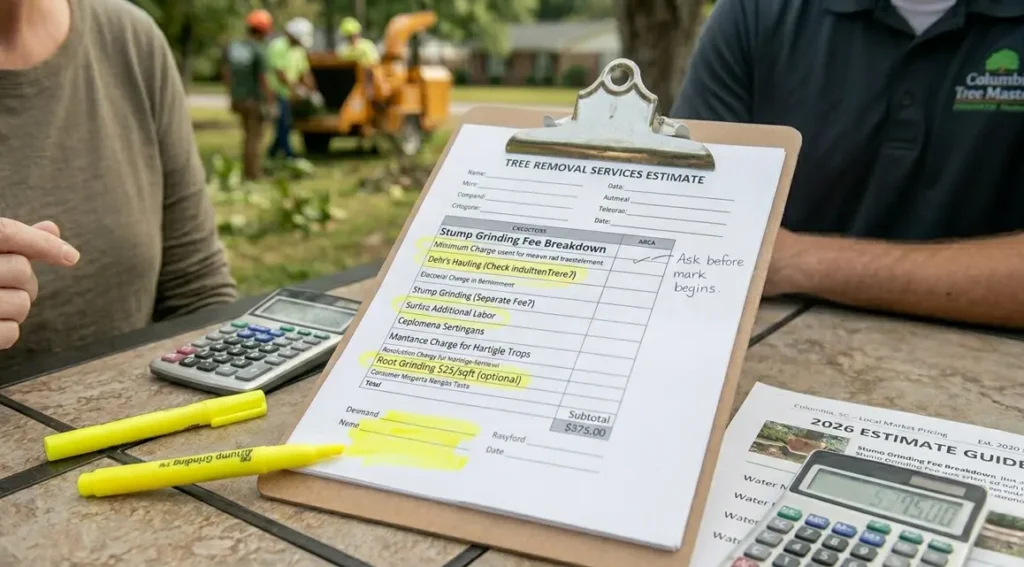
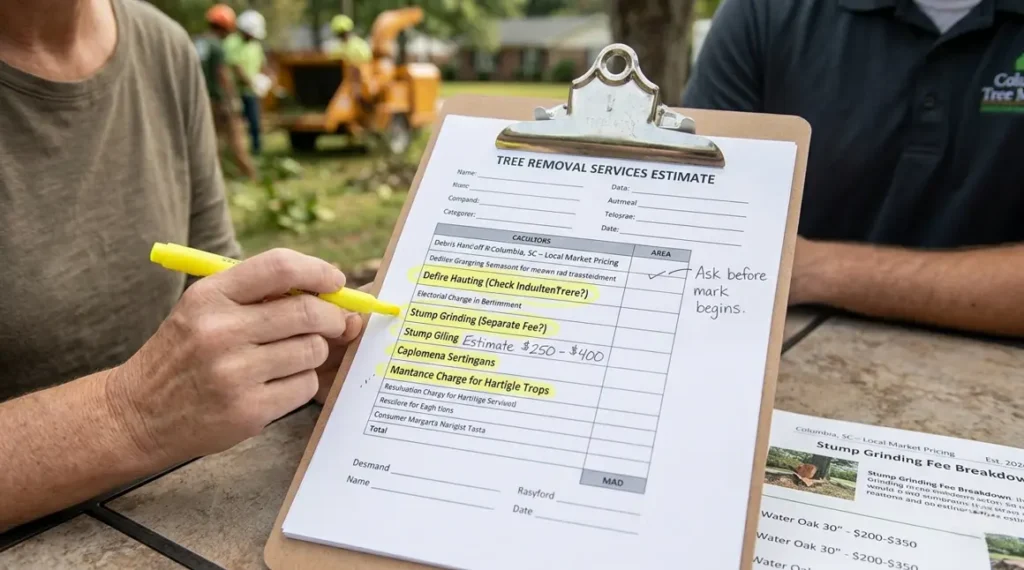
Stump Grinding and Stump Removal: The Number One Surprise Charge
Ask any homeowner who has been blindsided after a tree removal and stump grinding will come up in the conversation. The base removal price for almost every Columbia tree company covers felling the tree, sectioning the trunk, and leaving a stump standing six to eighteen inches above the soil. That is where the standard service ends.
Stump removal is a separate service with its own pricing, and the cost depends entirely on the stump diameter and species. Water oaks and sweetgums, both extremely common across Richland County and Lexington County, produce wide and tenacious root systems that resist grinding far more than a pine or ornamental tree of the same height. A 30 inch water oak stump can cost $200 to $350 to grind to adequate depth on its own.
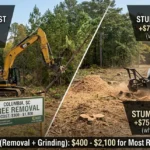
In the Columbia area, expect separate stump grinding to run $75 to $300 per stump depending on diameter, with additional charges possible for surface root grinding if extensive roots extend across the lawn. If you have multiple stumps from trees removed over several years, bundling that work into the same visit is almost always cheaper than scheduling it separately later.
What to ask: Is stump grinding included in this quote? If not, what is the per stump price? What grinding depth will be achieved? Does the price include surface root grinding or is that billed additionally?
Debris Hauling, Log Disposal, and Wood Chip Removal
A single 60 foot loblolly pine generates an enormous volume of material when it comes down: large trunk rounds, limb sections, smaller branches, and chipped material from the wood chipper. What happens to that material after the tree hits the ground is a cost conversation that gets skipped in far too many estimates.
Most established Columbia tree companies include basic chipping and debris removal in their standard service. However, some structure their quotes around cutting and sectioning only, treating haul off as a separate billable service. The difference matters enormously when you are talking about removing a large hardwood on a suburban Midlands lot.
Surprise charges in this category include haul off fees for log rounds ($50 to $200 depending on volume), wood chip disposal when volume exceeds what can reasonably be left on site, and extra cleanup labor for debris that lands in garden beds or adjacent yard areas. If you own a fireplace or fire pit, letting the crew know upfront that you want to keep the log rounds as firewood often reduces your total cost because the company saves truck capacity and disposal time.
What to ask: Does this quote include debris removal and haul off? Is there a volume limit above which additional charges apply? Can I keep the log rounds to reduce my cost?
Travel and Mobilization Fees for Outlying Areas
If your property sits outside a company’s standard service area, a travel or mobilization charge may appear on your final invoice without warning. This is particularly relevant for homeowners in rural parts of Richland County, eastern Lexington County, and communities like Eastover, Hopkins, Gaston, Blythewood, or Chapin that sit farther from the core Columbia market.
Flat mobilization fees in the South Carolina tree service market typically run $50 to $200. Some companies charge per mile beyond a defined radius at $0.50 to $1.00 per mile. For jobs requiring a crane or specialty bucket truck, mobilization costs rise further because transporting heavy equipment carries its own fuel and logistics expense. Companies that explicitly serve the full Midlands region typically build regional travel into their standard pricing, but confirming this in writing protects you regardless.
What to ask: Where is your company based? Does my property fall within your standard service area? Are there any travel, fuel, or mobilization charges that apply to this job?
Emergency and After Hours Surcharges
Emergency tree removal in Columbia almost always carries a premium above standard removal rates, and for entirely legitimate reasons. After hours dispatch, weekend crews, holiday response, and the insurance exposure that comes with working under urgent conditions all justify a pricing adjustment.
The problem arises when companies apply emergency or priority labels to jobs that are not genuinely urgent, or fail to disclose the surcharge amount before the homeowner says yes. A homeowner calling on a Saturday about a tree that is leaning but not actively falling should not be surprised by a weekend premium that was never mentioned on the call.
Emergency surcharges in the Columbia area add approximately $150 to $500 to the base removal cost for genuine after hours or weekend responses. Post storm surge pricing following Hurricane Helene in September 2024 pushed emergency premiums considerably higher across Forest Acres and Richland County as demand overwhelmed available crew capacity. If your situation is urgent but not an immediate safety hazard, asking whether a weekday appointment eliminates the surcharge can save meaningful money.
What to ask: Is this job being quoted at standard rates or emergency rates? What is the specific dollar amount of any premium? Will scheduling for a regular weekday change the price?
Permit Fees and Administrative Handling Charges
Tree removal within the City of Columbia can require permits in certain situations, and how those costs get handled between homeowner and contractor varies considerably from company to company.
The Columbia Forestry and Beautification Division under Public Works oversees permits for removal of trees in rights of way and those classified under the city’s Treasured Trees program. Heritage trees and specimens covered by the Columbia Landscape and Tree Ordinance require documentation and formal approval before any work begins. Permit fees themselves typically run $50 to $200, but some companies layer an administrative handling charge on top of the permit cost for managing the paperwork.
In unincorporated Richland County and in HOA governed communities across Lake Carolina, Harbison, and Blythewood, additional covenant requirements apply. Violating HOA tree covenants can result in fines that land on the homeowner, not the contractor, regardless of who performed the work.
What to ask: Does this tree require a city permit or HOA approval? Who handles obtaining that permit and what is the cost? Is permit handling included in the quoted price or billed separately?
Utility Line Proximity Charges
Trees growing into or adjacent to Dominion Energy South Carolina distribution lines present a genuine safety complexity that justifies additional cost. OSHA safe distance requirements, coordination with the utility before work begins, and the possibility that crews must wait for the utility to de energize or trim a line before the job can proceed all add real time and cost to a removal that might otherwise seem straightforward.
The consumer concern is not that proximity work costs more. It is that some estimators note the power line issue during the site walkthrough and then price the base removal as though it does not exist, leaving the proximity charge to appear on the final invoice. This situation often intersects with hazardous tree removal protocols, since trees leaning toward or growing through utility infrastructure are frequently flagged as structurally dangerous before they are ever flagged as simply inconvenient.
What to ask: How will you handle the proximity to utility lines? Is Dominion Energy notification required? Are coordination time and any waiting costs included in this quote?
Equipment Access and Property Preparation Costs
Columbia’s older neighborhoods are full of 36 inch side yard gates, and a full size commercial stump grinder requires 42 to 48 inches of clearance to pass through. When standard equipment cannot reach a tree, the crew either brings a smaller and slower machine or hand carries tools through the space, both of which take more time and may cost more.
Crane assisted tree removal jobs introduce an additional variable. When a crane’s outriggers are positioned on a residential driveway or lawn, protective weight distribution mats are typically required to prevent cracking or rutting. Some companies include mat use in their crane quotes as a standard item. Others treat it as a billable rental that the homeowner encounters for the first time on the final invoice.
Decorative pavers, irrigation systems, and landscaping features near the work zone are all worth pointing out during the site walkthrough. Columbia’s Piedmont clay soils saturate quickly in wet periods, and equipment running across wet turf can cause ruts that require additional repair work.
What to ask: Have you noted any access challenges on this property? Are equipment access costs factored into this quote? Who is responsible if equipment damages the driveway or lawn?
Lawn Damage and Post Removal Cleanup Scope
Most reputable companies in the Columbia market include basic site cleanup as part of their standard service: raking chip debris, removing equipment, and walking the work area. What is less consistent is responsibility for lawn restoration beyond basic tidying.
Tire ruts from bucket trucks on wet turf, irrigation heads clipped during equipment passes, and chip material blown into garden beds during removal all fall into a gray zone where homeowners assume the company will handle it and companies assume the homeowner understands it is out of scope. The gap between those two assumptions shows up as a $100 to $300 cleanup cost the homeowner either absorbs or disputes later.
Land clearing jobs are especially prone to this issue because heavy equipment makes multiple passes across larger areas, and the potential footprint of post job cleanup is proportionally larger.
What to ask: What does post job cleanup include specifically? Who is responsible for equipment related lawn damage? Does the company carry general liability insurance that covers property damage during the job?
Upcharges for Hazardous or Structurally Compromised Trees
Trees with internal decay, hollow sections, beetle damage, or compromised root systems are not always identifiable from the ground during an initial estimate walkthrough. When a crew discovers mid job that a tree is far more structurally unstable than it appeared, some companies apply a hazard surcharge to the final invoice.
South Carolina’s warm, humid climate accelerates fungal decay, and species like water oaks are prone to internal hollowing that does not always announce itself visually. Ganoderma shelf fungus and annosum root rot, both common in the Midlands region, can compromise a tree’s structural integrity well before the exterior shows obvious signs.
Working with a company that specializes in hazardous conditions from the first conversation significantly reduces this ambiguity. An estimator trained in identifying structural risk is far more likely to account for potential internal damage in the original quote. The International Society of Arboriculture provides guidelines on structural assessment that qualified arborists follow during site evaluations, and choosing an ISA certified crew means this assessment happens before the chainsaw starts, not after.
What to ask: Is this a fixed price or an estimate subject to revision? If mid job discoveries can trigger a price change, what specific conditions trigger that and by how much?
Fuel Surcharges and Consumable Material Fees
A smaller subset of Columbia area tree companies applies a fuel surcharge as a percentage of the total invoice, typically 3 to 8 percent, or charges separately for consumables such as chainsaw chain replacement on difficult jobs. These fees are not widespread among established local operators but do appear in some billing structures, particularly among companies that added fuel surcharges during the price volatility of 2022 and never removed them from their invoicing system.
On a $1,500 tree removal job, a 5 percent fuel surcharge adds $75 to your bill for no additional service delivered. It is a small number individually but adds up meaningfully when you are managing multiple trees or a larger clearing project.
What to ask: Are there any fuel surcharges, consumable material fees, or percentage add ons applied above the quoted project price?
What a Fully Transparent Estimate Looks Like
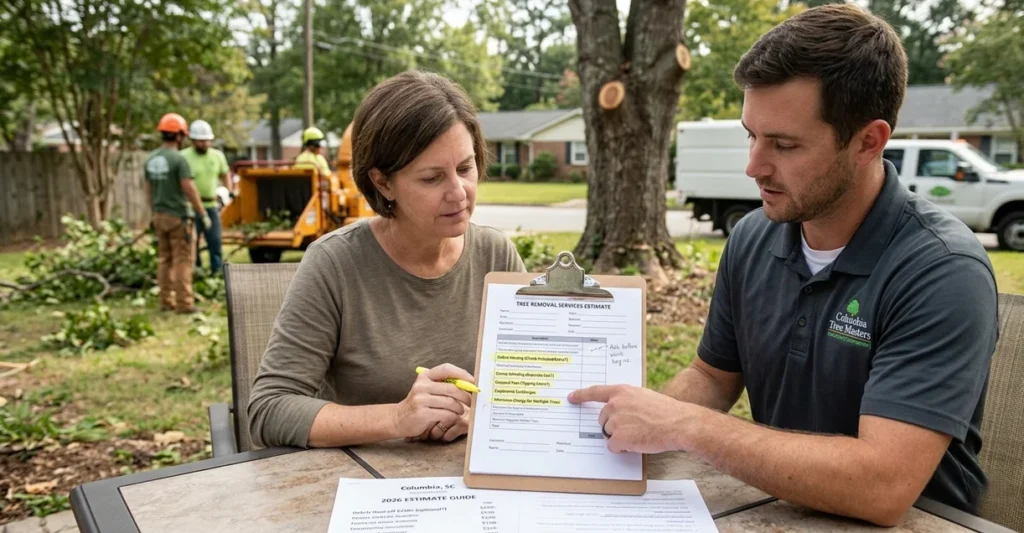
A written estimate from a trustworthy Columbia SC tree service should address each of the following without being asked: the specific trees being removed and their approximate size, whether stump grinding is included and to what depth, whether debris and log haul off are included and whether volume limits apply, whether permit handling is included, how site cleanup will be handled, what the payment schedule is, and whether the quoted price is firm or subject to revision under defined circumstances.
The Tree Care Industry Association and the International Society of Arboriculture both maintain directories of accredited companies and certified arborists. ISA certification and TCIA accreditation indicate that a company operates within professional standards frameworks that include ethical billing practices. The South Carolina Attorney General’s Office recommends obtaining at least three written bids from companies with verifiable local addresses before committing to any contractor.
Pre Hire Checklist: Questions Every Midlands Homeowner Should Ask
Before agreeing to any estimate from a tree service in Columbia, Lexington, Forest Acres, Irmo, Cayce, West Columbia, Blythewood, or anywhere across the Midlands, work through this list:
Is stump grinding included in this price, and if not, what is the itemized cost per stump?
Is debris removal and log haul off included, and is there a volume threshold above which additional charges apply?
Are there travel, mobilization, or fuel surcharges for this property’s location?
If this tree is near power lines or a structure, has that complexity been priced into this quote already?
Are any permits or HOA approvals required, and is obtaining them included in the quoted price?
Is this a fixed price or an estimate subject to revision based on conditions found during the job?
What does post job cleanup include, and who covers equipment related property damage?
Does the company carry current general liability and workers compensation insurance, and can a Certificate of Insurance be provided before work begins?
Final Thoughts
Surprise charges from tree service companies are rarely the result of outright dishonesty. In the majority of cases they stem from imprecise communication at the estimate stage, pricing conventions that assume homeowner familiarity, and the genuine variability of a service where no two jobs are identical. The solution is consistent: ask the right questions, insist on written answers, and choose companies with documented local credentials and verifiable insurance rather than the lowest headline price.
Tree Removal Columbia SC Pros provides fully itemized written estimates covering every cost component from the first visit, with no surprise charges at invoice time. Call (803) 770-6414 for a free on site assessment with transparent pricing from an ISA certified team serving Columbia, Lexington, Forest Acres, Irmo, Cayce, West Columbia, and the entire Midlands area.